Showing posts with label Frog. Show all posts

Saturday, March 26, 2011

Tree Frog


True Wild Life | Tree Frog | The tree frog is a small species of frog that spends its life in the trees. True tree frogs are found inhabiting the forests and jungles in the warmer regions all over the world. Tree frogs are best known for their distinctive disc-shaped toes on the end of each leg. The rounded toes of the tree frog, gives its feet more suction and therefore better grip when moving around in the trees.


There are four main species of tree frog which vary in size from just a few to more than 10 centimetres in length. The European tree frog is found in meadows and shrublands across eastern Europe but is considered endangered in western Europe. The Common tree frog is the smallest of the tree frog species and is found in a variety of habitats across south-east Asia. The Cuban tree frog is the largest of the four tree frog species ans is natively found in Cuba and its surrounding islands, but has been introduced to parts of Florida, the Caribbean and Hawaii. The Red-Eyed tree frog is the most distinctive of the tree frog species and is native to the jungles of Central America. The Red-Eyed tree frog has a long narrow body and hind legs which point outwards, along with its characteristic red eyes.


As with other frogs and toads, tree frog are generally carnivorous animals, feeding primarily on insects, worms and spiders. The large Cuban tree frog will eat anything that will fit in its mouth including lizards, snakes, small mammals and even other frogs. Due to their small size, the tree frog has numerous predators wherever it lives in the world. Birds, mammals and reptiles of all shapes and sizes prey on the tree frog and the tree frog is also known to be a tasty tree for large fish.


During the mating season, tree frogs make loud croak-like calls to one another in order to attract a mate. The female tree frog lays her eggs on a leaf above the water, which develop into tadpoles in just a few days when they fall into the water below. The metamorphic process from tadpole to adult tree frog can take anywhere from a few weeks to several months.

Wednesday, March 23, 2011

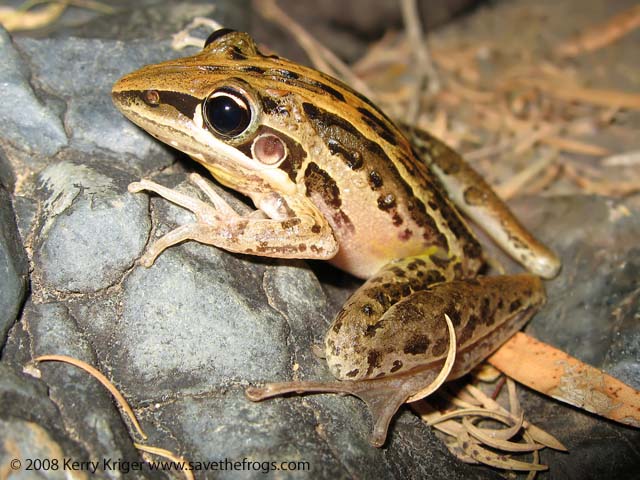
Striped Rocket Frog


True Wild Life | Striped Rocket Frog | The striped rocket frog is a small species of rocket frog natively found on mainland Australia and on a number of the islands that are both close to it and surround it. The striped rocket frog is closely related to other species of rocket frog, all of which are named for their remarkably agile jumping abilities and their streamlined-shaped bodies. The striped rocket frog is found mostly in coastal areas from northern Western Australia to New South Wales in the south and is also found inhabiting lowland areas of parts of the tropical Indonesian island of Papua New Guinea. The striped rocket frog is found in a variety of wetland habitats including swamps, ponds and flooded grasslands in forests and open woodland.


The striped rocket frog is an easily identifiable species of frog due to its relatively small size and the two stripe-like folds of skin the run vertically down the striped rocket frog's back. The skin of the striped rocket frog is usually a dark brown colour and has dark spot-like markings across it's back and legs. The striped rocket frog has a narrow and streamlined body which makes for more agile movement through both the air and water. The striped rocket frog has incredibly long and powerful legs which can propel this little frog over vast distances (comparable with it's size). The striped rocket is actually a type of tree frog but despite this, the striped rocket frog spends the majority of it's life on the ground due to the fact that they sticky discs on their toes are simply not big enough to allow them to climb with ease.


Like most other species of frog, the striped rocket frog is a carnivorous animal that catches the majority of it's using it's long and sticky tongue. The striped rocket frog primarily feeds on small invertebrates such as insects, moths and spiders along with worms and insect larvae. The webbed feet of the striped rocket frog mean that this animal is able to hunt effectively both on land and in the water. Due to the fairly small size of the striped rocket frog, it has numerous predators within its natural environment. Large birds and bats prey on the striped rocket frog from the skies and ground-dwelling predators such as cats and foxes prey on this species on the ground. The water-based eggs and tadpoles of the striped rocket frog are preyed upon by aquatic animals including fish and other frogs.


In the same way as other species of frogs (and indeed toads), the striped rocket frog undergoes the incredible metamorphic process of turning from the young aquatic tadpole, to the generally ground-dwelling adult. Females lay an average of 60 eggs in a sticky mass known as frogspawn which floats on the surface of the water. When they are ready, the hatching tadpoles drop into the water where they begin there life underwater. Today, the striped rocket frog has been listed as Least concern as although it is not deemed to be under immediate threat from extinction, the striped rocket frog populations have been affected in much of the native range from deforestation and the introduction of mammalian predators.